It’s a Total SOP Story

Control issues are normal for business owners. If you own a business, you have probably dealt with control issues personally. Wisdom would suggest that as an owner, you need to give up control to scale. Here’s why you absolutely and 100% do NOT need or want to give up control as a business owner. When someone suggests you need to give up control of a business, they’re likely identifying an issue where the owner (you) is acting as a bottleneck. If everything, or nearly everything, needs to run through you, you are a bottleneck, and it is a very serious business problem. Serious enough to argue that until this problem is fixed, you don’t have a business—you merely have a high-paying job. If you’re ok with that, stop reading now and give yourself back some much-needed time to be in your business. For those of you who don’t want this kind of business, please continue with me. The Control Issue If there’s a bottleneck and it’s you as the owner, then this is a control issue. The challenge so many owners face is you don’t want to give up control. The most common mindset being nobody can do it as well as you can. Well again, I’m here to argue that we don’t need to give up control, but I am also going to address the fallacy that nobody can do it as well as you. Imbuing Controls vs. Surrendering Control The real question to ask is this: Does giving up control mean being able to step back and allow the business to run without you? No, it does not. It does not because giving up control suggests surrendering something. Fantastic business owners do not surrender control; they imbue controls. Imbuing controls is different from surrendering control. I’d define imbuing controls as putting people in a position to be able to replicate the work and decisions that you make. It is putting in place the processes and routines required to duplicate the work being done in a business, in a way that allows anyone to step in and succeed. This means stepping back with intention and being deliberate with how we allow our business to be run in our absence. It’s an extension of our control. We accomplish extending control beyond ourselves by writing, documenting, and recording everything. In a sense, it’s the opposite of giving up control. It’s creating the structure to control your business and organization without your active presence. The Role of SOPs If done correctly, you can absolutely create a business where someone else can do it as well as you. How? By giving them the exact playbook to replicate your actions and decision-making. Done well, and you can leverage hires and employees, free up your time and attention onto what is most important to you, and eliminate the challenge of input/output (the challenge that the only way to create more output is more personal input). A lot of business owners will sob about how hard it is to give up control. They’re right. Giving up control is hard. But imbuing controls isn’t a sob story at all—it’s an SOP story. Components of SOPs SOPs or Standard Operating Procedures are HOW we imbue controls into our business. SOPs are simply instructions on how we do our work to achieve the results we want. There are different types of SOPs, but they all share some universals. Output SOPs are all about achieving results, and so the result or output is one of the four ingredients. The output is the end result we want. Procedure This is the type of SOP you’re putting in place. Some SOPs are going to be task-oriented with specific instructions and very clear and defined step-by-step guides on how to accomplish the task at hand. Other SOPs may require less defined actions. Trigger SOPs are put in place to allow anyone to step in and run a job, a system, department, or even an entire business. A trigger is simply the instance in which a decision or task needs to be made. Potential triggers could be a customer inquiry or running low on inventory. The Benefits of Implementing SOPs If, as an owner, we took the time to document each and every trigger our business experiences, we could transform how our business runs. By putting SOPs into place, not only does it create a roadmap for consistent results, it also places us as owners in a position where we can successfully hire someone and have the controls in place for them to be as successful as we are, or perhaps even more so. By implementing SOPs, we can fully delegate to others all while retaining output and controls. If we needed an added benefit beyond removing ‘control issues’ from our dialogue, allowing us to put our time and attention into where we want and solving the input/output dilemma, this is it: creating SOPs greatly enhances the value of a business. The greater the value of your business, the larger of an asset you have at your disposal. Conclusion Standard Operating Procedures (SOPs) are fundamental tools for business owners who want to maintain control while scaling their operations. By documenting processes and routines, you ensure consistency, efficiency, and quality, making it easier to delegate tasks and focus on strategic growth. Start creating your SOPs today and transform your business into a well-oiled machine that can run smoothly without your constant oversight. If you’re interested in our other services provided through IVOLVE Performance and Development please check out either of the links below: 2 on 1 coaching emphasizing self-management, behavior, public speaking, and accelerated sales and growth. For more information https://www.jbandthedoctor.com/individual-coaching/ Corporate Workshops for your teams: https://www.jbandthedoctor.com/corporate/ If you’re looking for further insight into our Owner Advisory Boards you can find out more here or join us at our next simulated board event. IVOLVE + THRIVE Owner Advisory Boards to help business owners earn more, work less, and enjoy the journey. You can check out more at: www.ivolveandthrive.com

The Do’s and Don’ts of Hiring

Hiring may be one of the most important decisions we ever make as entrepreneurs. A good team member can help us achieve our goals and the wrong employee can crater our plans. Here are some unique tips on what you can do to hire better and more effectively in the future, in other words, the do’s and don’ts of hiring. You’re hired! Just kidding but we do have a free gift that you may be interested in! We put together a FREE guide identifying the Top 6 reasons businesses fail and give you actionable steps you can take on every one of these to make sure it’s your competition failing and not you! It’s our free gift to you. Access it here! Do – Consider Outsourcing The last thing most of us want to do is give up control of who we hire to an outsider that doesn’t understand us or our business as well as we do. Yet bringing in an expert to consult and help assess candidates makes a ton of sense unless your background is cemented in hiring, hr or organizational psychology. Outside experts can help identify what traits really matter in your hire and help you identify the right person for the job. Don’t – Hire for Tomorrow Employment should not be permanent. Although it’s in our nature to want to hire the perfect person for a forever position, especially today, employment tends to last no more than 3 years. Be sure when you’re developing the criteria for your hire you keep in mind that the role is not permanent and hire for exactly what you need right now, not what you need forever. Do – Put Culture First The culture of your business is incredibly important. Finding the right person that can help continue to develop and nurture the culture you want is imperative in a hire. Lead with culture and the results will come. Don’t – Rush it and Don’t Get Discouraged Hiring can be difficult for both parties. Not only is it a negotiation it’s also in many ways just like the first couple of dates. Finding the right employee can be a daunting task that requires a good helping of patience. Remember, investing and developing in the right people will have an outsized impact on your business for years to come. Any good hiring stories? Let us know at info@jbandthedoctor.com Did you know we work with professionals and leaders with 2 on 1 coaching that marries the expertise of a Doctor of Psychology and mindset coach with the business savvy of a former Fortune 50 sales executive. We specialize in helping entrepreneurs and professionals like you master your time, sales, and confidence, to evolve you to your greatest potential. To learn more about our coaching you can contact us here! Feel like you need coaching but not sure you can afford the investment in yourself? That’s ok! We have a scholarship available to diverse candidates of need. You can apply for our scholarship for our coaching and our courses here. Not enough time in the day, we get it. Check out our AYOP course, 2x Your Time, right here. We walk through everything from time management and calendar basics to how you can supercharge your days weeks and months through practices and techniques that are grounded in experience and proven by science.
Why It’s Important to Address Failure Directly

Failure is inevitable and it’s not a bad thing. We look at failure as a negative and yet, in the grand experiment that is life and business, failure is an absolute certainty. Everyone experiences failure and it’s often the best learning experience for us. Failure can be the best teacher and should be embraced. In this blog we’ll discuss why it’s so important to address failure directly. Don’t fail to check out our free giveaway for you! We put together a FREE guide identifying the Top 6 reasons businesses fail and give you actionable steps you can take on every one of these to make sure it’s your competition failing and not you! It’s our free gift to you. Access it here! Failure Does Not Mean Fault Failure and fault are two different things that we commonly lump together. Oh, something failed so whomever was responsible for that failure must be at fault. Yet that is rarely the case. If there is a failure, the statistics suggest that rarely is any single individual at fault (think less than 10% of the time). Failure is an opportunity to fix something broken, not an opportunity to assign blame and fault. Failure Helps Us Get Better There are different types of failures and many of them deal with uncertainty and experimentation. In these instances, our failures help us correct to more predictable outcomes. In other words, these failures drive innovation. If the failure is a result of effort to improve, it can absolutely be a positive. It’s All About Perception People will trust you more if you’re open about your failures. Everyone knows we’re going to have them from time to time, and it’s about how you deal with them that is most important. By addressing failures head-on we can emphasize to anyone paying attention that we’re aware of the failure, will put energy and time into correcting for them in the future and that will help develop more trust than simply pretending we are perfect! How do you address your failures? Let us know at info@jbandthedoctor.com Did you know we work with professionals and leaders with 2 on 1 coaching that marries the expertise of a Doctor of Psychology and mindset coach with the business savvy of a former Fortune 50 sales executive. We specialize in helping entrepreneurs and professionals like you master your time, sales, and confidence, to evolve you to your greatest potential. To learn more about our coaching you can contact us here! Feel like you need coaching but not sure you can afford the investment in yourself? That’s ok! We have a scholarship available to diverse candidates of need. You can apply for our scholarship for our coaching and our courses here. Not enough time in the day, we get it. Check out our AYOP course, 2x Your Time, right here. We walk through everything from time management and calendar basics to how you can supercharge your days weeks and months through practices and techniques that are grounded in experience and proven by science.
Implementing Regular Reviews

One of the most common opportunities that professionals can take advantage of more consistent and effective reviews. If you’re wondering why we are talking about reviews in the first week of January, it’s because we set our sights on moving forward in the start of the year but the best way to keep that momentum going is to also look back on a regular basis. Today we wanted to offer a way to implement effective, regular reviews. 6 Methods To Make Sure Your Business Doesn’t Fail Before we discuss our tips, did you know that 70% of businesses will fail? We put together a FREE guide identifying the Top 6 reasons businesses fail and give you actionable steps you can take on every one of these to make sure it’s your competition failing and not you! It’s our free gift to you and you can access it right here. Calendar It The best way to implement a review strategy is to put it on the calendar. We recommend at least 1 review day per quarter, or two full days for the first 6 months. This needs to be a blocked day in the calendar the same way you’d treat a vacation. Block it and do NOT make the mistake of booking anything during that day. Know Your KPIs Key Performance Indicators are exactly what they suggest. Make sure that your review includes the activities that are most important to the growth of your business. If you don’t know these already then take a step back and consider what activity really leads to your goals and put something in place that allows you to track it. Re-Center When we move forward it’s rarely in a straight line. Implementing a regular review means recognizing where we have lost track of our true north. It happens to all professionals and is a top reason it takes longer to achieve goals than we think. Reviews are like pulling out a compass and making sure we are moving in the direction we want to. You’d be surprised at how easy it is to find ourselves off track! How do you implement reviews? Let us know at info@jbandthedoctor.com! Did you know we work with professionals and leaders with 2 on 1 coaching that marries the expertise of a Doctor of Psychology and mindset coach with the business savvy of a former Fortune 50 sales executive. We specialize in helping entrepreneurs and professionals like you master your time, sales, and confidence, to evolve you to your greatest potential. To learn more about our coaching you can contact us here! Feel like you need coaching but not sure you can afford the investment in yourself? That’s ok! We have a scholarship available to diverse candidates of need. You can apply for our scholarship for our coaching and our courses here. Not enough time in the day, we get it. Check out our AYOP course, 2x Your Time, right here. We walk through everything from time management and calendar basics to how you can supercharge your days weeks and months through practices and techniques that are grounded in experience and proven by science.
What it means to be courageous in business

When you hear courage, you probably don’t immediately think about business. You may think of police officers and heroism, or service members overseas, firefighters from 9/11 but you aren’t too likely to think of business leaders. Yet everyday professionals and business leaders exhibit courage in business. What it means to be courageous in business is to develop and display the skill sets of risk/reward decision making, to admit you are without all the answers and to stand up for what is right. 6 Methods To Make Sure Your Business Doesn’t Fail Stay strong! Did you know that 70% of businesses will fail? We put together a FREE guide identifying the Top 6 reasons businesses fail and give you actionable steps you can take on every one of these to make sure it’s your competition failing and not you! It’s our free gift to you and you can access it right here. Courage Through Decision Making Taking calculated risks in business means to identify and take action on potential failures. It also means to weigh the risk of that failure with the reward of success. Great business leaders display strong risk adjusted decision making and continue to push the boundaries of what their business and they are capable of. This is a skill best developed through experience, mentorship and wisdom. The Courage to Not Know As business grows more complex our ability to be an expert in all aspects hits a wall. Our willingness to openly admit our own limits of knowledge is an essential skill for professionals and business owners today. Better to admit lack of knowledge and ignorance than pretend to know what we do not. The Courage of Standing up for What Is Right It’s easy as professionals and business owners to sacrifice integrity and ethics in the pursuit of business. After all, plenty of people and businesses are willing to look the other way or blatantly break the rules if they think they can get away with it. Standing up for what is right takes courage. It takes a willingness to accept losses that otherwise might not be taken. It also leads to a culture of excellence that will be unmatched by any other company or professional that is willing to compromise their ethics and integrity. Is courage in business important to you? Let us know in our private Facebook community, the EML! You can join here! Join our community We can work with you individually and in a group setting with our unique 2 on 1 coaching that marries the expertise of a Doctor of Psychology and mindset coach with the business savvy of a former Fortune 50 sales executive. We specialize in helping entrepreneurs and professionals like you master your time, sales, and confidence, to evolve you to your greatest potential. To learn more about our coaching you can contact us here! Feel like you need coaching but not sure you can afford the investment in yourself? That’s ok! We have a scholarship available to diverse candidates of need. You can apply for our scholarship for our coaching and our courses here. Not enough time in the day, we get it. Check out our AYOP course, 2x Your Time, right here. We walk through everything from time management and calendar basics to how you can supercharge your days weeks and months through practices and techniques that are grounded in experience and proven by science.
Simple Steps You Can Take Today To Earn More Trust

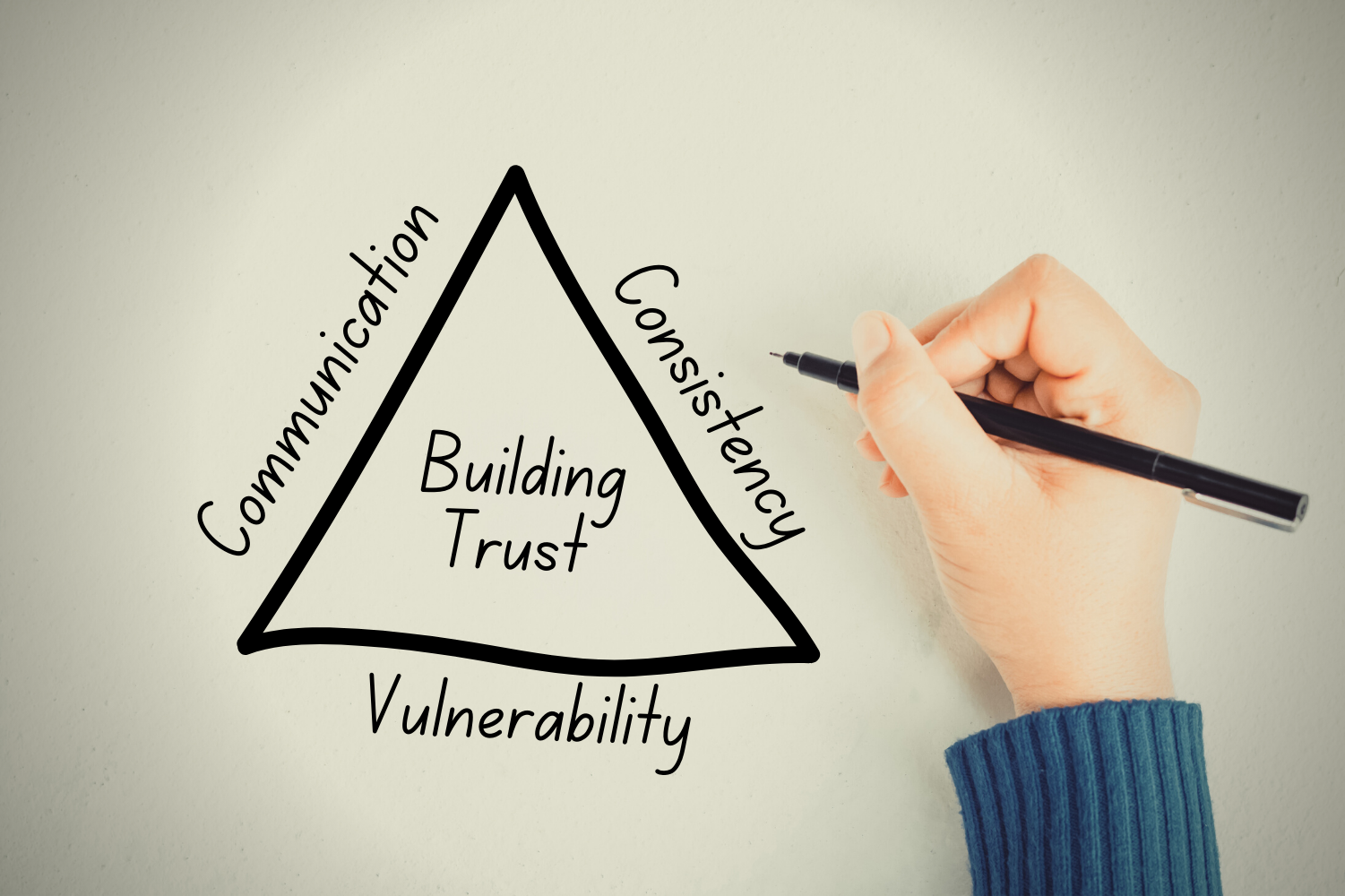
Trust has an incredible return on your time and investment. It has a tangible impact that can catapult a brand and individuals’ success. Perhaps what is most challenging is trust is difficult to build. It’s not complex to figure out, but it is difficult. As they say, trust can take an incredibly long time to earn and only moments to lose. With that in mind, here are some simple steps you can take today to earn more trust with your clients and employees! 6 Methods To Make Sure Your Business Doesn’t Fail Before we discuss our tips, did you know that 70% of businesses will fail? We put together a FREE guide identifying the Top 6 reasons businesses fail and give you actionable steps you can take on every one of these to make sure it’s your competition failing and not you! It’s our free gift to you and you can access it right here. We were inspired to write about trust after our conversation with Dr. Toby Travis, founder of TrustEd Consulting. You can listen in to the replay of our conversation on our podcast here, or you can watch it on our Youtube channel! Watch it on our Youtube channel! Watch on Youtube https://www.youtube.com/watch?v=alemoct89ys&t=261s Working for a Fortune 50 employer gave me unique insight into culture and trust at one of the largest institutions in the world. Our specific business accounted for over 20% of the revenue earned by our company and we played an instrumental role in the success of our company. Some of the greatest lessons I learned during my tenure was around trust. How to both earn it and how to lose it. Let’s jump into some easy steps on how to earn and develop trust, right now. 1. Start communicating more People begin to trust when their expectations are met. It’s incredibly hard to meet expectations if you do not communicate what the expectations should be! For most of us, what feels like acceptable communication is probably under communication for our clients and over communication is acceptable. Remember, what seems obvious to you is probably not understood by your clients or your employees unless you outright say it to them. 2. Be consistent Uncertainty kills trust and people love certainty. One of the simplest ways to build trust right now is to start getting more consistent. Find ways you can create a process, system or SOP and implement it for yourself and your team. The consistency will lead to consistent results which will lead to trust. It’s one of the reasons Starbucks is such a successful model! 3. Get more vulnerable Your human and your success is built on selling yourself. People want to see the person behind the business. Vulnerability must be the most authentic, raw and instantly impactful to show the person behind the business. Nobody likes to do it, but everyone else loves to see it. After all, how much do people pay for inside access? It’s a proven business model to instantly start building more trust. There are a number of other simple steps can we take to build trust. If you’re curious for more, reach out to us! We love answering your questions from the Entrepreneur Mastery Lab. If you’d like to join us and other professionals that are striving to get better every day, you can access the group here! Join our community If you need to build trust, quickly, we can help! Our unique 2 on 1 coaching marries the expertise of a Doctor of Psychology and mindset coach with the business savvy of a former Fortune 50 sales executive. We specialize in helping entrepreneurs and professionals like you master your time, sales, and confidence, to evolve you to your greatest potential. To learn more about our coaching you can contact us here! Feel like you need coaching but not sure you can afford the investment in yourself? That’s ok! We have a scholarship available to diverse candidates of need. You can apply for our scholarship for our coaching and our courses here. Not enough time in the day, we get it. Check out our AYOP course, 2x Your Time, right here. We walk through everything from time management and calendar basics to how you can supercharge your days weeks and months through practices and techniques that are grounded in experience and proven by science.